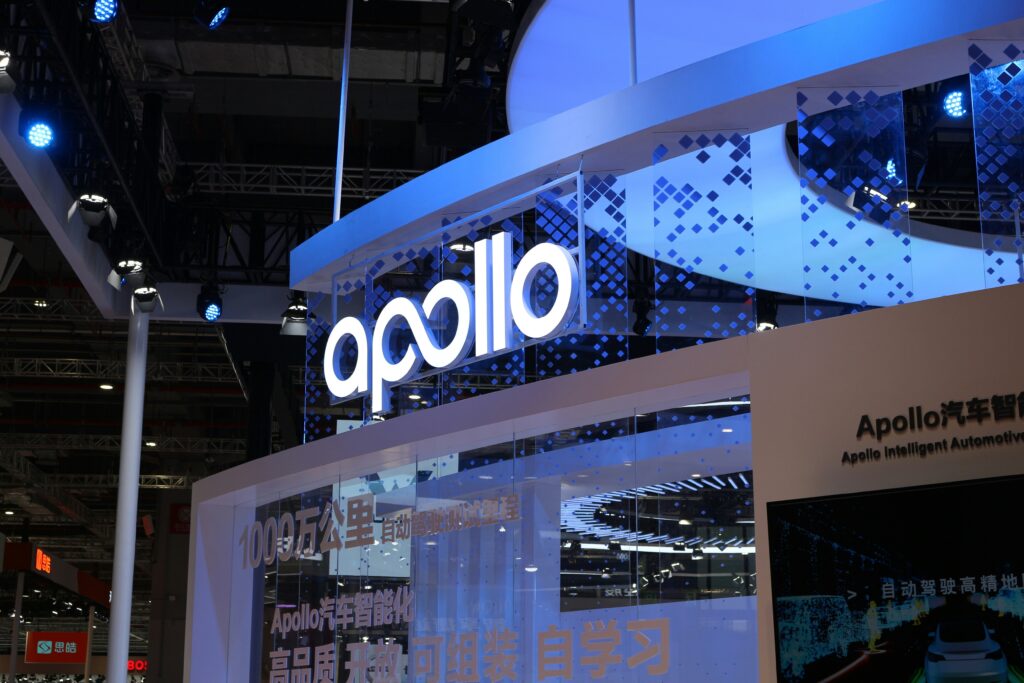
Chinese tech giant Baidu announced on Tuesday that it has slashed the production cost of its Apollo RT6 self-driving vehicle to 250,000 yuan (US$34,525) per unit, marking a major milestone in making autonomous driving more affordable and accessible in China, South China Morning Post reported.
Speaking at a trade event in Wuhan, Hubei province, Baidu co-founder and CEO Robin Li Yanhong highlighted the RT6’s position as the world’s only mass-produced Level-4 autonomous (L4) driving vehicle, underscoring Baidu’s technological edge.“Tesla represents another technology road map … [it] wanted to go from L2 to L4, and is still working on it,” Li said at the event.
The SAE International standard defines six levels of driving autonomy. Level 4 allows vehicles to operate without human intervention in most conditions. Baidu first unveiled the Apollo RT6, its sixth-generation self-driving vehicle, in 2022, emphasizing its advanced automation and lower production costs. Li noted then that the reduced cost of production would enable Baidu to deploy more robotaxis across China, potentially halving the cost of a robotaxi ride compared to a traditional taxi.
In Wuhan earlier this year, Baidu’s Apollo vehicles gained attention with affordable robotaxi fares, sparking consumer interest but raising concerns among traditional taxi drivers about potential job displacement.
The competition to develop higher levels of autonomous driving technology is intensifying in China. Consultancy Counterpoint predicts that by 2026, around 1 million electric vehicles (EVs) in the country will meet the L3 autonomy standard. A typical L3 autonomous vehicle is equipped with environment detection capabilities, allowing it to make informed decisions. However, drivers must remain alert and be ready to intervene in specific situations.
Meanwhile, Tesla plans to introduce its Full Self-Driving system, classified as Level 2 by SAE standards, to China by early 2025, pending regulatory approval.