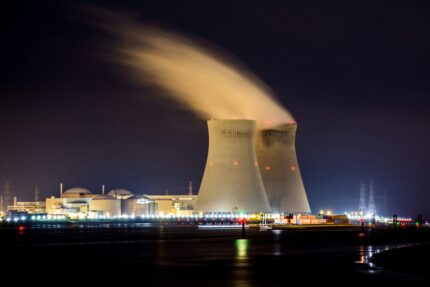
Image by Dominic Kurniawan Suryaputra via Unsplash
China’s imports of liquefied natural gas (LNG) have risen by 15% year-on-year, according to a report by Reuters based on data from the London Stock Exchange Group (LSEG). This growth rate significantly outpaced the approximately 5% increase in South Korea and the 2.5% growth recorded in Japan over the same period.
Cumulatively, China has imported nearly 80 billion cubic meters of LNG this year, the highest volume since 2021 for the same period, according to LSEG data.
This increase in LNG demand points to greater gas consumption by power producers, as well as industrial users such as factories. However, the cost of generating power from LNG remains a challenge. According to the Institute for Energy Economics and Financial Analysis (IEEFA), electricity produced from imported LNG is estimated to cost $30 to $40 more per megawatt hour than that generated using coal.
As a result, only firms that have already switched from coal to gas-fired setups are using the more expensive LNG. Companies that still have the option to use coal or other fuels are avoiding LNG due to its higher cost.
Looking ahead, a sustained recovery in industrial demand could lead to further increases in LNG imports and usage, particularly among companies without the capability to revert to coal. However, unless LNG prices drop significantly in the near term, few Chinese industrial users are expected to make the switch from coal to gas, especially given the uncertainty surrounding China’s broader economic outlook and industrial profits.
At first glance, rising LNG imports might suggest that China is shifting towards greater reliance on gas for electricity generation. However, a closer analysis reveals that gas still plays a relatively minor role in China’s energy mix. Renewables and other clean energy sources have a much more prominent position in the country’s electricity production.
Additionally, high gas prices, compared to coal and renewable energy, are limiting its attractiveness as a power source for industrial firms. With China’s industrial sector facing challenges from the ongoing property crisis and economic slowdown, companies continue to favour cheaper fuels for industrial processes. Meanwhile, utilities are prioritising renewable energy sources. As such, there may be limited room for further growth in natural gas consumption in China in the near to medium term.