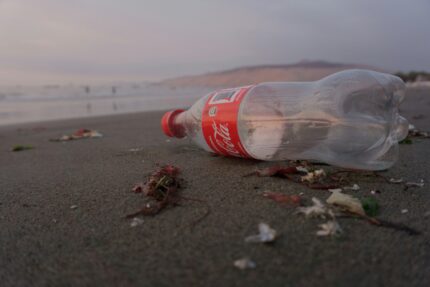
Offsets will take centre stage as negotiations for a global plastics treaty resume in Geneva on 5 August. These credits – issued for specific amounts of plastic collected or recycled – are being promoted as a solution to help bridge the estimated $240 billion annual gap in global plastic waste management funding, Renewable Matter reported.
But growing criticism suggests the approach could do more harm than good. Experts warn that plastic credits mirror the shortcomings of carbon offsets – giving companies a way to avoid meaningful reductions by paying for waste collection elsewhere. With plastic production expected to triple by 2060, such schemes may entrench pollution rather than reduce it.
Offsets depend on the principle of ‘additionality’ – the idea that credited actions would not occur without financial support. In practice, proving this is difficult. Research shows that collection and recycling often happen before credits are issued, while verification standards remain weak. A recent report commissioned by Fauna & Flora, an international nature conservation charity, questions the environmental credibility of major credit schemes and highlights the reputational risks companies face if accused of greenwashing.
Offsets also oversimplify the nature of plastic pollution. Reducing everything to weight ignores the chemical complexity of plastics, which involve over 16,000 substances – more than 4,000 of which are considered hazardous. Many of these chemicals are poorly understood and lack adequate safety data.
Offsets are further linked to the problem of waste colonialism. Most credit-generating projects are based in Southeast Asia and East Africa – regions already under strain from imported plastic waste. Much of the material is incinerated or used in cement kilns yet still classified as ‘recycled’ under current credit frameworks.
Offsets, many experts argue, are no substitute for systemic reform. Instead, they call for extended producer responsibility (EPR) systems, which provide long-term, coordinated financing for entire waste management systems. As treaty discussions continue, the inclusion of plastic credits remains one of the most divisive and closely watched issues on the agenda.