


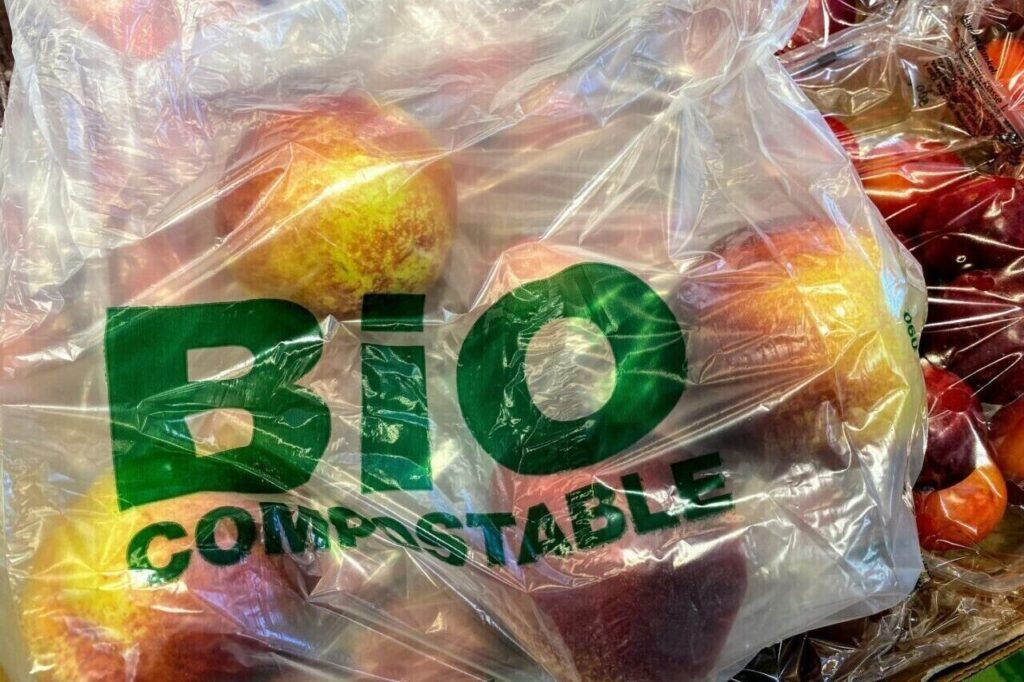
According to the UN Environment Programme, more than 1 billion tonnes of food are wasted globally each year. That makes up 19% of the food produced worldwide, not counting the additional 13% of food that is lost during production and transportation.
Food waste from households, restaurants, and retail outlets decomposes and accounts for up to 10% of global greenhouse gas emissions. The UN has set a goal of halving global food waste by 2030, in an effort to significantly mitigate climate change.
In response to this problem, SIBUR, one of Russia’s largest petrochemical manufacturers, is promoting polymer packaging as a potential solution to limiting food waste.
The manufacturer believes that polymer packaging extends the shelf life of products due to its moisture and air barrier properties. The material is lightweight, flexible, and cost-effective, so it is ideal for storing frozen food and ready-to-eat portioned meals. It ultimately helps to reduce food waste.
At the same time, plastic waste accounts for only one-third of food waste, which means it causes less pollution. In addition, the issue of plastic waste is gradually being tackled as companies collect and recycle polymer packaging, reusing it in the production of new items, SIBUR highlights.
Influenced by societal environmental concerns, polymer producers such as SIBUR are investing in recycling projects. SIBUR is now creating a network of partner companies to collect waste and process it into small flakes, which can be used in polymer production again.
Under the Vivilen brand, SIBUR has developed rPET granules containing up to 70% recycled plastic. These granules are then used to produce environmentally friendly bottles with 30% recycled content. SIBUR says its production of these “green” granules uses up to 34,000 tonnes of recycled plastic annually and prevents the disposal of up to 1.7 billion plastic bottles.
Multilayered and contaminated packaging pose greater recycling challenges. To address these issues, SIBUR is exploring the potential of chemical recycling, or thermolysis – a technology that employs high temperatures and pressure to transform packaging waste into liquid raw materials from which new polymer products can be made. The company plans to make an investment decision on a thermolysis pilot project this year.
Today, the plastic waste recycling movement is gaining momentum globally, and an anticipated global treaty to end plastic pollution could become a pivotal moment in that effort. However, the goal is not to eliminate polymers, as they have a number of crucial uses, but to integrate them into a more sustainable production cycle.
Sources: EU Reporter, The European Business Review