Welcome to the Plastics Weekly, NEO’s regular news monitoring of the plastics industry.
Every week, we publish a roundup of the top developments in plastics and sustainability – from regulatory changes to company news.
This week’s highlights:
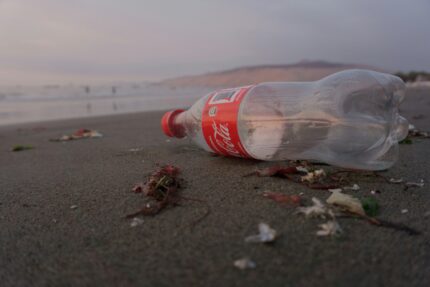
- Pepsi and Coke have pledged to reach net-zero emissions in the coming decades, but they’ll first need to fix a problem they helped to create: the United States’ dismal recycling rate. Each year, beverage companies in the U.S. produce about 100 billion plastic bottles to sell their products, while Coca-Cola Co. globally produced 125 billion plastic bottles last year. The production and disposal of this plastic accounts for 30% of Coca-Cola’s carbon footprint, or about 15 million tonnes a year – equal to the pollution from one of the dirtiest coal-burning power plants. (Bloomberg)
- German chemicals giant BASF has introduced products that purify complex pyrolysis oils from plastics waste, with potential applications in tire recycling. The company’s PuriCycle catalysts and adsorbents selectively remove or convert contaminants in the oils that occur as secondary raw materials in chemical plastics recycling. BASF says these products enable closed-loop, downstream processing of plastics, helping recyclers to meet industry standards for the composition of pyrolysis oils. (European Rubber Journal)
- Siemens and Plastic Energy, the world’s leading chemical recycling company, have partnered to boost chemical recycling. Plastic Energy is building several larger facilities across Europe, Asia and the U.S. that will incorporate Siemens’ automation and measurement technology. Plastic Energy developed a TAC recycling process, which converts plastic waste into a substance called TACOIL that serves as a feedstock to produce new plastics. (Packaging News)