


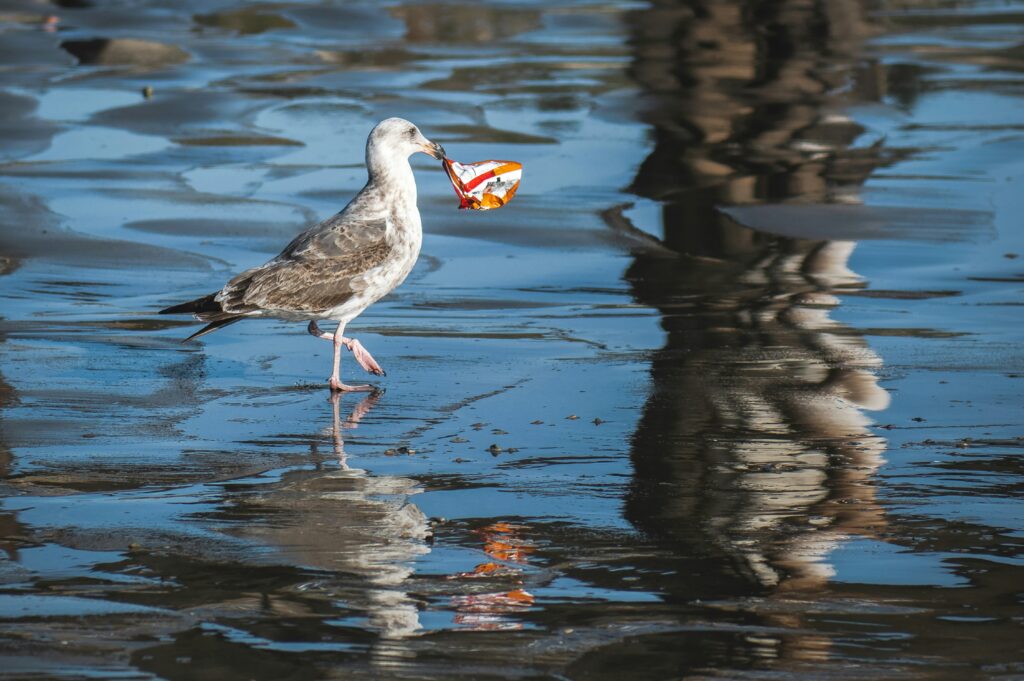
Image: Tim Mossholder via Unsplash
Southeast Asians have some of the highest levels of microplastic exposure in the world, with recent studies pointing to widespread environmental contamination across the region, reported CNA.
A Cornell University study found that Indonesians consume the most microplastics globally – around 15 grams per person each month, roughly equal to three credit cards. Malaysians are next, consuming 12 grams of microplastics per month on average, while Filipinos and Vietnamese each consume about 11 grams. Six of the 10 largest contributors to ocean plastic pollution are Southeast Asian countries.
Microplastics are tiny particles formed when larger plastic items break down. These fragments, less than 5 millimetres in size, are now found in soil, oceans, and even the air. In Jakarta Bay, microplastics were detected in 94% of fish sampled. Since the bay supplies seafood to millions in the city of Jakarta, human exposure is high. Globally, studies have also detected microplastics in pork, beef, chicken, and seafood.
Most of these particles come from everyday products like plastic bags and PET bottles. PET degrades under sunlight and ocean conditions. According to the UN, around 80% of ocean plastic originates from land, often from single-use, non-recyclable items.
Waste management challenges worsen the issue. In 2022, microplastics were found in nearly all 68 rivers tested across Indonesia. Jakarta’s Bantar Gebang landfill – the largest in Southeast Asia – is nearing capacity. While some countries like Malaysia, the Philippines, and Vietnam rely on waste imports to support recycling, not all materials are reused. Indonesia and Thailand have now banned such imports.
In Manila’s Happyland slum, families often depend on collecting plastic waste for income, despite the health risks. Research links microplastics to cognitive decline, heart disease, and potential prenatal effects. Some particles are small enough to enter the bloodstream, organs, and even cross the placenta.
The Philippines’ Trash to Cashback programme allows residents to exchange recyclables for food and goods. Since 2021, it has collected over 300,000 kilograms of plastic.
Indonesia aims to ban single-use plastics by 2029 and expand village-level recycling. Jakarta has already seen a 42% drop in plastic bag use since a 2020 ban.
Countries are also exploring extended producer responsibility (EPR) laws to make manufacturers accountable for plastic waste. Still, reducing plastic use remains difficult, especially in low-income communities where smaller, plastic-packaged goods are often the most affordable option.