


Image: Mark König via Unsplash
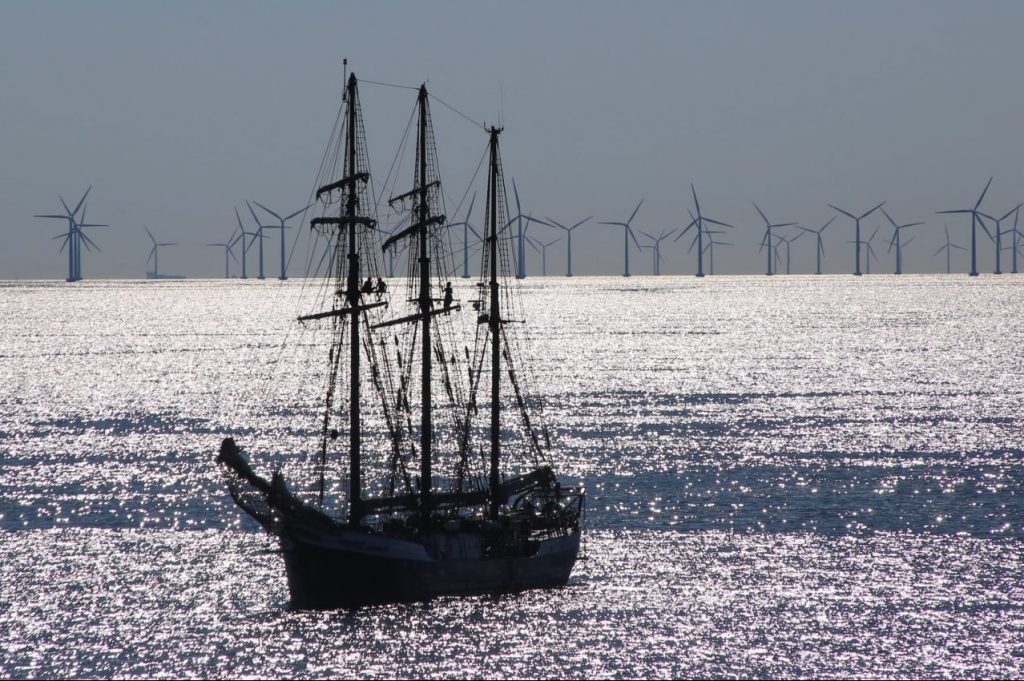
Great Britain will press an advantage in offshore wind, betting on larger generation targets to create jobs as the nation deals with pandemic losses.
The U.K. will boost its target for generation to 40 gigawatts by 2030 from the previous 30GW aim, Prime Minister Boris Johnson said in a release. The plan will support up to 60,000 jobs in ports, factories and the supply chains, manufacturing offshore wind turbines and delivering clean energy.
“As Saudi Arabia is to oil, the U.K. is to wind. A place of almost limitless resource but without the carbon emissions,” Johnson said. Saudi Arabia is the world’s leading oil exporter.
The goals are the part of the Prime Minister’s ten-point plan for a green industrial revolution, which will be set out fully later this year as the UK’s path to net zero emissions by 2050.
The U.K. projects will need to meet requirements supporting U.K. manufacturers in government-backed renewables projects, and help reach an industry target of 60% of offshore wind farm content. The government will put 160 million pounds towards upgrading ports and infrastructure in Northern England, Scotland and Wales to support the increase in wind capacity.
The plan also supports next generation technology including 1 GW of generation from floating offshore wind which are built further out to sea in deeper waters, boosting capacity where winds are strongest.
Additionally, the late-2021 auction round of contracts-for-difference (CFD) will seek double the renewables capacity of the 2019 round. The 2019 CFD auction offered long-term contracts at set prices to projects totaling 5.8 gigawatts, including 5.5 GW of offshore wind. This increase will be key in actually moving projects forward.
“This is a challenging target,” said Duncan Clark, Head of UK Region for Ørsted. “But achievable if government and the industry continue to work together to accelerate deployment and build out the UK project pipeline as quickly as possible.”
Efforts to battle global warming by cutting carbon emissions have driven gains in renewable energy over the past decade with scale and technology reducing generation costs.
Yet, the creation domestic manufacturing jobs rather than sending cash abroad for oil may be just as strong a political impetus for the business – especially as nations seek recovery from the pandemic.
The trick in pulling this off, gaining green energy and building jobs and exportable competencies, will be managing the details of local content requirements. The nature of the requirements themselves can produce delays in procurement, logistics or permitting or potentially increased costs.