


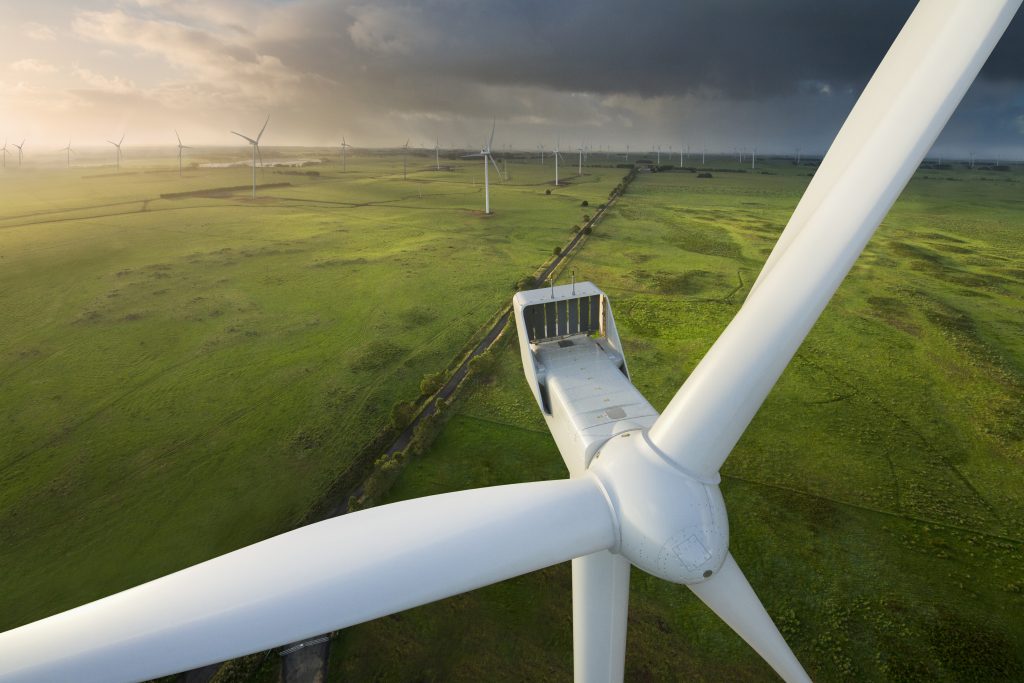
Vestas, the Danish wind turbine manufacturer, is attempting to stay good on its word to deliver a sustainable business as it unveils technology to make wind blades recyclable.
Blades on wind turbines are constructed currently with epoxy composites geared to be maximally light and strong in order to harness maximum wind energy. The problem is that currently, wind blades that have served their purpose are sent to the landfill.
There are not so many of them that it is a major issue. All the same, the optics look bad, considering renewables get so much support for being sustainable. Vestas, Olin, The Danish Technological Institute and Aarhus University have set a goal to present a commercial solution for this within three years for industrial adoption.
The partners have developed a two-step process technology. In the first phase, thermoset composites are dissembled into fibre and epoxy. The second step is a chemcycling process where the epoxy is further broken up into base components similar to virgin materials. These materials can then be reintroduced into the manufacturing of new turbine blades. The result would make turbines 85-90 percent recyclable.
“As global commitments to a net-zero future increase, it’s absolutely crucial to ensure the wind industry can scale sustainably, which includes Vestas fulfilling our ambition to produce zero-waste turbines by 2040,’’ according to Allan Korsgaard Poulsen, Head of Sustainability and Advanced Materials, Vestas Innovation and Concepts.
Earlier this year, Vestas invested in Swedish wood technology company Modvion with the aim to bring wooden wind turbine towers into its product lines. The goal from Vestas was to create a more sustainable product line for its turbine customers.
The wooden towers by weight are stronger than steel and can be constructed higher, according to Modvion. The use of wood reduces reliance on steel prices and additionally reduces greenhouse gases, associated with steel production, in the construction cycle of wind arrays.
Vestas did not provide any further detail on costs or expenses associated with chemcycling epoxy resins for new blades or the construction of wooden wind towers.
In general, it seems that the wind turbine manufacturer, one of the world’s largest, is seeking to remain true to its promises on delivering a circular economy. And it should be.
It has benefitted massively as a company on subsidy provided by different governments. Those subsidy arrangements, which in time incubated the wind industry to become competitive with other generators, were very much tied to delivering the cleanest most sustainable alternatives. So wind should logically act the same.