


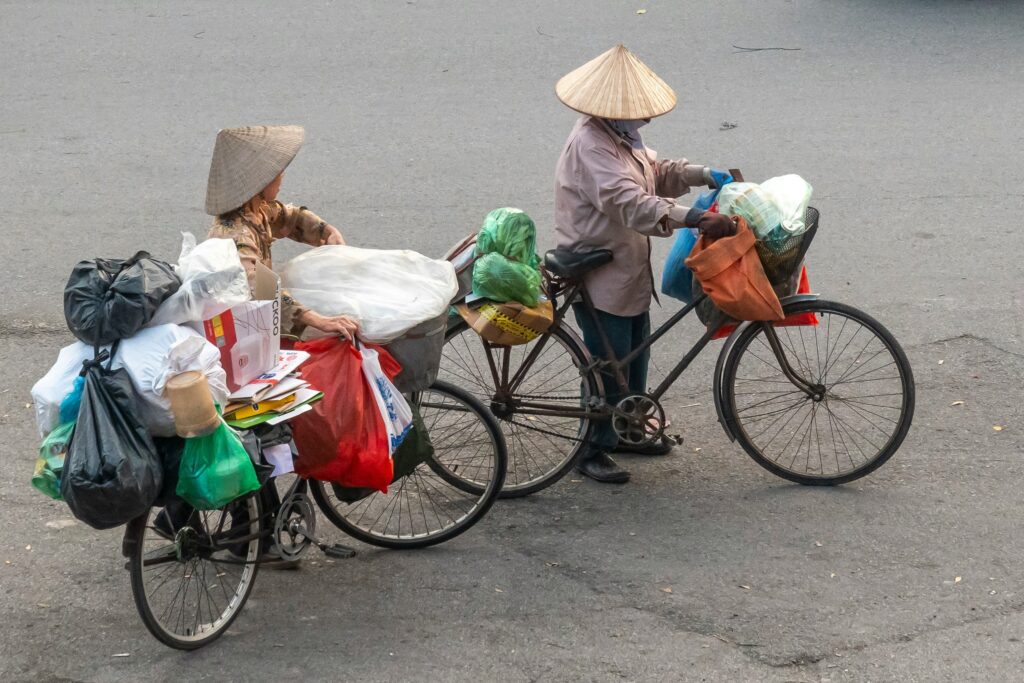
Image: Etienne Girardet via Unsplash
Starting in 2025, Vietnam will enforce stricter waste import regulations, reported Reuters.
Since China’s 2018 ban on plastic scrap imports, Vietnam has become a key player in the global plastic waste trade, ranking as the fourth-largest importer in 2022, according to the OECD.
Rising imports have overwhelmed Vietnam’s capacity to manage its own plastic waste, and although tighter regulations could reduce inflows, the extensive informal recycling sector poses challenges for effective oversight, experts warn.
According to a 2021 World Bank report, over 25% of Vietnam’s plastic recycling occurs in craft villages such as Minh Khai. The report also highlighted that the country had an additional capacity to handle 300,000 metric tons of imported plastic waste.
Vietnam imported 420,000 tons of plastic scrap last year, an 11% increase from 2022, far exceeding the country’s reported capacity to handle such waste, according to U.N. data that likely underestimates the total volume.
A 2023 WWF report, supported by the government, revealed that ineffective sorting severely limits recycling efforts in Vietnam, with only 30% of the country’s plastic waste properly separated for processing.
Consequently, despite the added expense of shipping, Vietnam’s recyclers prefer imported plastic scrap due to its superior quality, according to research firm FiinGroup.
A January research paper estimates that Vietnam processes no more than one-third of the plastic waste it imports for recycling.
Kaustubh Thapa of Utrecht University, a co-author of the paper, explained that recycling efforts are hindered by imported plastic often being contaminated with organic waste, rendering it difficult or even impossible to process.
A significant portion of unprocessed plastic waste ends up in poorly managed landfills, with approximately 15% leaking directly into the environment and polluting oceans, according to the WWF report.
“Exporting waste for recycling to destinations without sound recycling capacity raises questions of fairness and sustainability,” Thapa and his co-authors highlighted this finding in their research paper.